Contributor
RickStudent, Philosopher, Writer, Developer
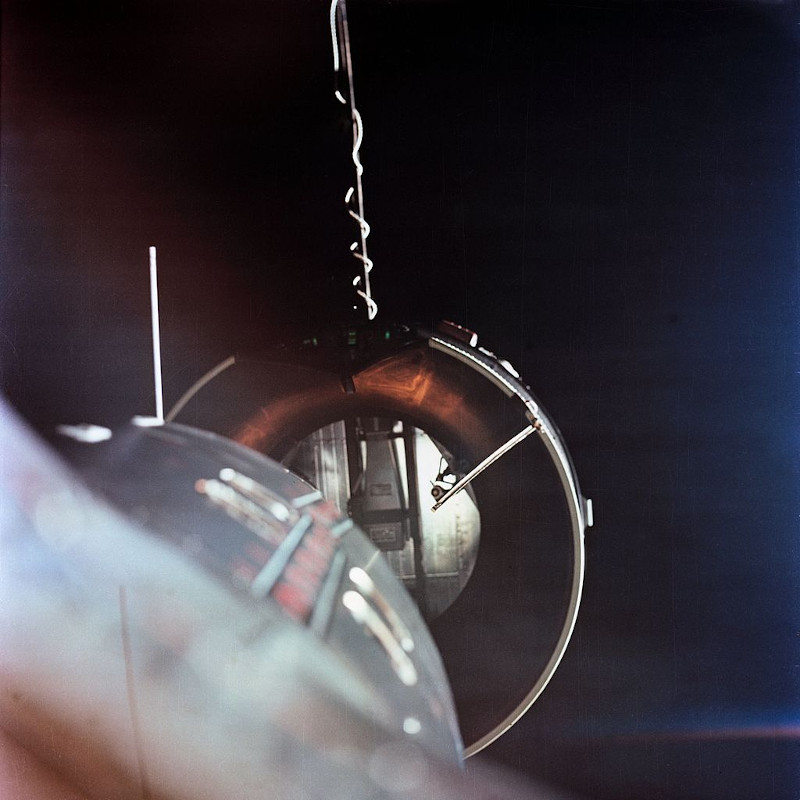
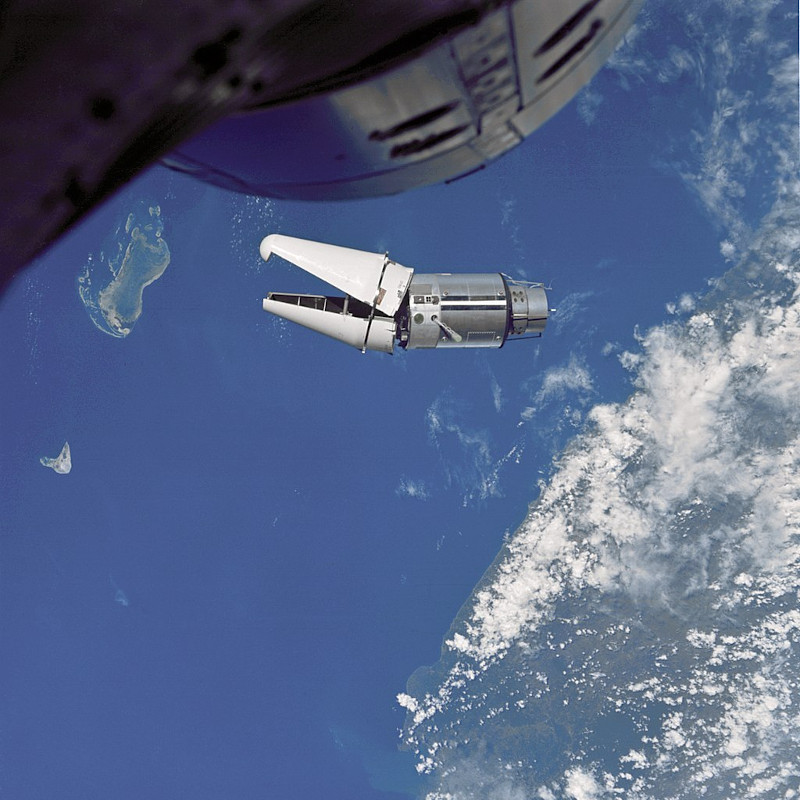
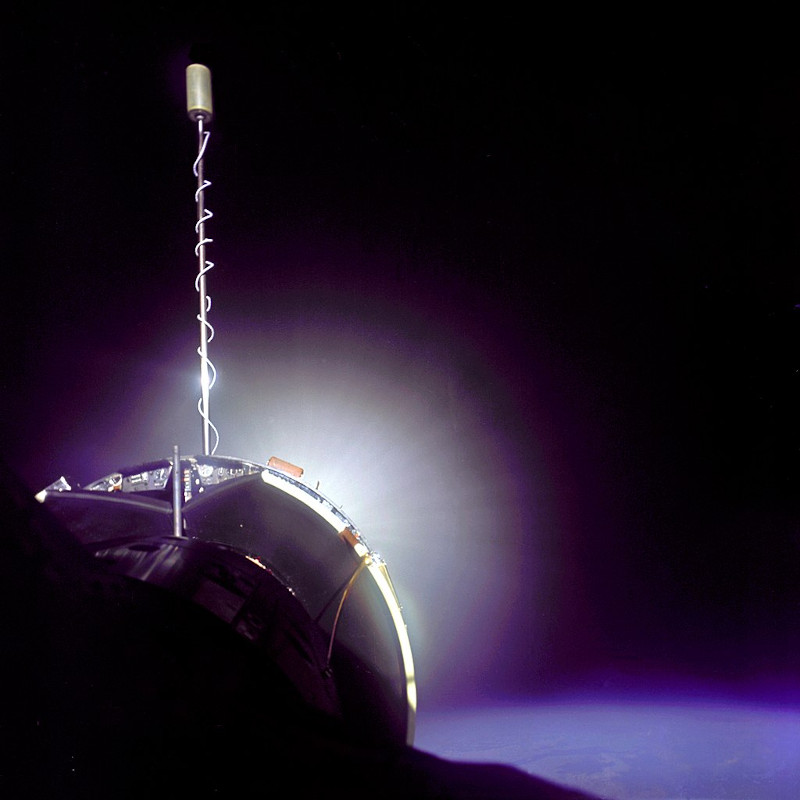
Performs standup extravehicular activity during the first day of the 4-day mission in space. Command pilot for the Gemini 12 mission, the last in the Gemini series, was astronaut James A. Lovell, Jr. Gemini 12 is docked to the Agena Target Docking Vehicle in background.
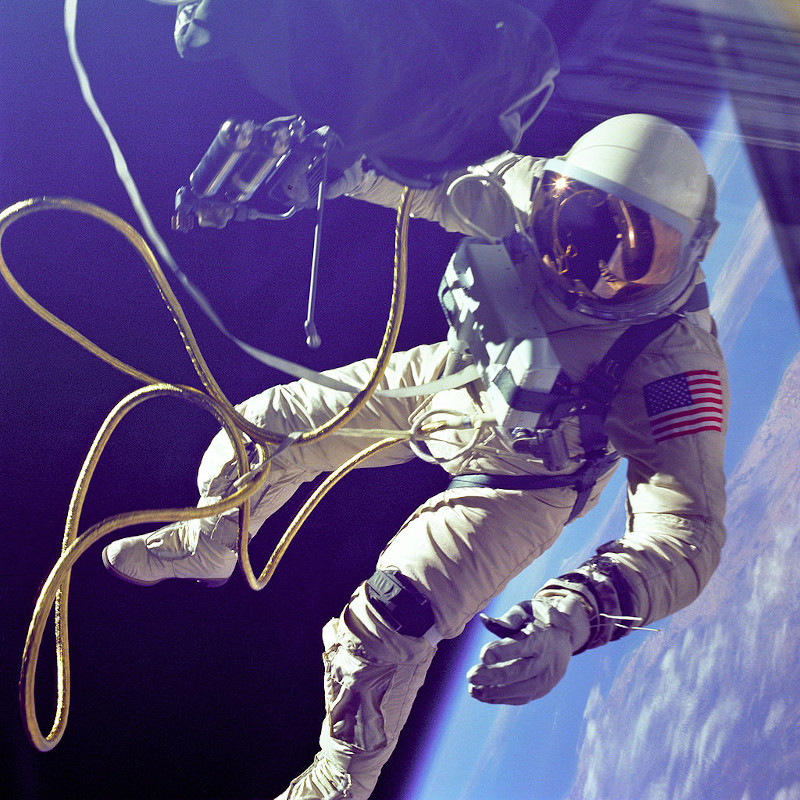
Astronaut Edwin E. Aldrin., Jr., pilot of the Gemini 12 spaceflight — Performs standup extravehicular activity during the first day of the 4-day mission in space. Command pilot for the Gemini 12 mission, the last in the Gemini series, was astronaut James A. Lovell, Jr. Gemini 12 is docked to the Agena Target Docking Vehicle in background.
Photo Credit: NASA - Public Domain, https://commons.wikimedia.org/w/index.php?curid=15993323
Astronaut Edwin E. Aldrin., Jr., pilot of the Gemini 12 spaceflight Performs standup extravehicular activity during the first day of the 4-day mission in space. Command pilot for the Gemini 12 mission, the last in the Gemini series, was astronaut James A. Lovell, Jr. Gemini 12 is docked to the Agena Target Docking Vehicle in background.
Project Gemini Patch
Photo Credit: Public Domain, https://commons.wikimedia.org/w/index.php?curid=1127845
Fred Rogers ordained
Photo Credit: https://www.syntrinity.org/wp-content/uploads/2018/09/fred-rogers-rainbow-01.jpg
Project Mercury logo
Photo Credit: By Craigboy - Own work, CC BY-SA 3.0, https://commons.wikimedia.org/w/index.php?curid=17414215
Taken by Apollo 8 crewmember Bill Anders on December 24, 1968, at mission time 075:49:07 [8] (16:40 UTC), while in orbit around the Moon, showing the Earth rising for the third time above the lunar horizon. The lunar horizon is approximately 780 kilometers from the spacecraft. Width of the photographed area at the lunar horizon is about 175 kilometers. [9] The land mass visible just above the terminator line is west Africa. Note that this phenomenon is only visible to an observer in motion relative to the lunar surface. Because of the Moon's synchronous rotation relative to the Earth (i.e., the same side of the Moon is always facing Earth), the Earth appears to be stationary (measured in anything less than a geological timescale) in the lunar
Earthrise — Taken by Apollo 8 crewmember Bill Anders on December 24, 1968, at mission time 075:49:07 [8] (16:40 UTC), while in orbit around the Moon, showing the Earth rising for the third time above the lunar horizon. The lunar horizon is approximately 780 kilometers from the spacecraft. Width of the photographed area at the lunar horizon is about 175 kilometers. [9] The land mass visible just above the terminator line is west Africa. Note that this phenomenon is only visible to an observer in motion relative to the lunar surface. Because of the Moon's synchronous rotation relative to the Earth (i.e., the same side of the Moon is always facing Earth), the Earth appears to be stationary (measured in anything less than a geological timescale) in the lunar "sky". In order to observe the effect of Earth rising or setting over the Moon's horizon, an observer must travel towards or away from the point on the lunar surface where the Earth is most directly overhead (centred in the sky). Otherwise, the Earth's apparent motion/visible change will be limited to: 1. Growing larger/smaller as the orbital distance between the two bodies changes. 2. Slight apparent movement of the Earth due to the eccenticity of the Moon's orbit, the effect being called libration. 3. Rotation of the Earth (the Moon's rotation is synchronous relative to the Earth, the Earth's rotation is not synchronous relative to the Moon). 4. Atmospheric & surface changes on Earth (i.e.: weather patterns, changing seasons, etc.). Two craters, visible on the image were named 8 Homeward and Anders' Earthrise in honor of Apollo 8 by IAU in 2018. [10]
Photo Credit: By NASA/Bill Anders - Public Domain, https://commons.wikimedia.org/w/index.php?curid=306267
Earthrise Taken by Apollo 8 crewmember Bill Anders on December 24, 1968, at mission time 075:49:07 [8] (16:40 UTC), while in orbit around the Moon, showing the Earth rising for the third time above the lunar horizon. The lunar horizon is approximately 780 kilometers from the spacecraft. Width of the photographed area at the lunar horizon is about 175 kilometers. [9] The land mass visible just above the terminator line is west Africa. Note that this phenomenon is only visible to an observer in motion relative to the lunar surface. Because of the Moon's synchronous rotation relative to the Earth (i.e., the same side of the Moon is always facing Earth), the Earth appears to be stationary (measured in anything less than a geological timescale) in the lunar "sky". In order to observe the effect of Earth rising or setting over the Moon's horizon, an observer must travel towards or away from the point on the lunar surface where the Earth is most directly overhead (centred in the sky). Otherwise, the Earth's apparent motion/visible change will be limited to: 1. Growing larger/smaller as the orbital distance between the two bodies changes. 2. Slight apparent movement of the Earth due to the eccenticity of the Moon's orbit, the effect being called libration. 3. Rotation of the Earth (the Moon's rotation is synchronous relative to the Earth, the Earth's rotation is not synchronous relative to the Moon). 4. Atmospheric & surface changes on Earth (i.e.: weather patterns, changing seasons, etc.). Two craters, visible on the image were named 8 Homeward and Anders' Earthrise in honor of Apollo 8 by IAU in 2018. [10]
Apollo 8 S-IVB rocket stage shortly after separation
Photo Credit: NASA - Public Domain, https://commons.wikimedia.org/w/index.php?curid=99091
Apollo 7's liftoff
Photo Credit: NASA - Public Domain, https://commons.wikimedia.org/w/index.php?curid=6449895
as seen from a launch tower camera (identifiable by its white-painted service module)
Apollo 6 launch — as seen from a launch tower camera (identifiable by its white-painted service module)
Photo Credit: NASA - Public Domain, https://commons.wikimedia.org/w/index.php?curid=430916
Apollo 6 launch as seen from a launch tower camera (identifiable by its white-painted service module)
(November 1967) ---  for mating with Spacecraft Lunar Module Adapter (SLA)-7 in the Kennedy Space Center's Manned Spacecraft Operations Building. LM-1 and SLA-7 are scheduled to be flown on the Apollo 5 (LM-1/Saturn 204) unmanned space mission.
Lunar Module-1 being moved into position — (November 1967) --- for mating with Spacecraft Lunar Module Adapter (SLA)-7 in the Kennedy Space Center's Manned Spacecraft Operations Building. LM-1 and SLA-7 are scheduled to be flown on the Apollo 5 (LM-1/Saturn 204) unmanned space mission.
Photo Credit: NASA - Public Domain, https://commons.wikimedia.org/w/index.php?curid=525529
Lunar Module-1 being moved into position (November 1967) --- for mating with Spacecraft Lunar Module Adapter (SLA)-7 in the Kennedy Space Center's Manned Spacecraft Operations Building. LM-1 and SLA-7 are scheduled to be flown on the Apollo 5 (LM-1/Saturn 204) unmanned space mission.
Apollo 4 Launch
Photo Credit: By NASA - Public Domain, https://commons.wikimedia.org/w/index.php?curid=6447621
Charred remains of the Apollo 1 cabin interior
Photo Credit: NASA - Public Domain, https://commons.wikimedia.org/w/index.php?curid=203101