Contributor
RickStudent, Philosopher, Writer, Developer
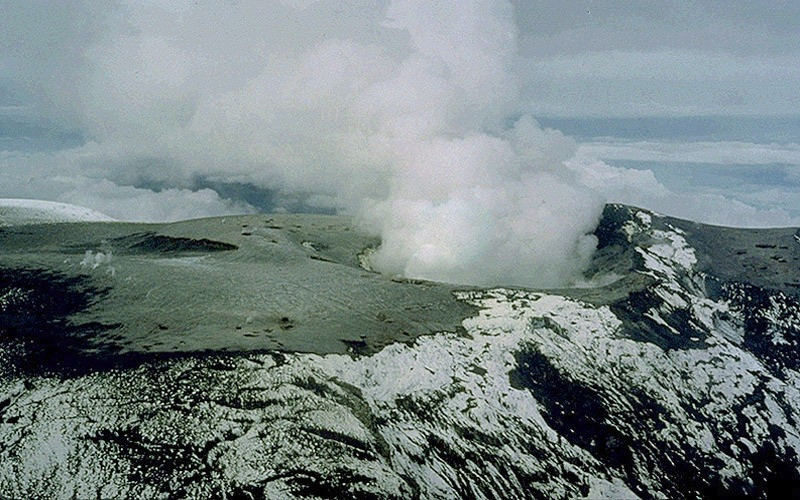
Indigenous American legends were inspired by the volcano's beauty
Mount St. Helens — Indigenous American legends were inspired by the volcano's beauty
Photo Credit: By Jim Nieland - US Forest Service, Public Domain, https://commons.wikimedia.org/w/index.php?curid=14773803
Mount St. Helens Indigenous American legends were inspired by the volcano's beauty
off the Coast of Tahiti, by Samuel Adkin
Resolution and Discovery — off the Coast of Tahiti, by Samuel Adkin
Photo Credit: Public Domain, https://commons.wikimedia.org/w/index.php?curid=6579268
Resolution and Discovery off the Coast of Tahiti, by Samuel Adkin
blue shows route after his death
Cook's third voyage — blue shows route after his death
Photo Credit: By AlexiusHoratius (talk) - self-made, CC BY-SA 3.0, https://en.wikipedia.org/w/index.php?curid=17406012
Cook's third voyage blue shows route after his death
The ice islands, seen the 9th of Jan., 1773, by William Hodges (expedition member)
Cook in Antarctica — The ice islands, seen the 9th of Jan., 1773, by William Hodges (expedition member)
Photo Credit: Public Domain, https://commons.wikimedia.org/w/index.php?curid=10756370
Cook in Antarctica The ice islands, seen the 9th of Jan., 1773, by William Hodges (expedition member)
Map of the supposed position of the hypothetical continent of Terra Australis Incognita (1657) by Jan Janssonius
Map of Terra Australis Incognita — Map of the supposed position of the hypothetical continent of Terra Australis Incognita (1657) by Jan Janssonius
Photo Credit: Public Domain, https://commons.wikimedia.org/w/index.php?curid=1422631
Map of Terra Australis Incognita Map of the supposed position of the hypothetical continent of Terra Australis Incognita (1657) by Jan Janssonius
Cook's second voyage
Photo Credit: By Jon Platek - self-made, CC BY-SA 3.0, https://en.wikipedia.org/w/index.php?curid=17405980
Cook's first voyage
Photo Credit: By AlexiusHoratius at English Wikipedia, CC BY-SA 3.0, https://commons.wikimedia.org/w/index.php?curid=41516799
By Thomas Luny, dated 1790
Earl of Pembroke, later HMS Endeavour, leaving Whitby Harbour in 1768 — By Thomas Luny, dated 1790
Photo Credit: Public Domain, https://commons.wikimedia.org/w/index.php?curid=7351149
Full-length portrait in oils of a clean-shaven young George in eighteenth century dress: gold jacket and breeches, ermine cloak, powdered wig, white stockings, and buckled shoes. by Allan Ramsay, 1762
George III, Coronation portrait — Full-length portrait in oils of a clean-shaven young George in eighteenth century dress: gold jacket and breeches, ermine cloak, powdered wig, white stockings, and buckled shoes. by Allan Ramsay, 1762
Photo Credit: Public Domain, https://commons.wikimedia.org/w/index.php?curid=23604082
George III, Coronation portrait Full-length portrait in oils of a clean-shaven young George in eighteenth century dress: gold jacket and breeches, ermine cloak, powdered wig, white stockings, and buckled shoes. by Allan Ramsay, 1762
by Allan Ramsay, 1762
George III — by Allan Ramsay, 1762
Photo Credit: Public Domain, https://commons.wikimedia.org/w/index.php?curid=6694162
George III by Allan Ramsay, 1762
Unlike the coat of arms of the other corporations in Britain that use a closed helmet, the Royal Society uses a barred helmet, reserved for members of the nobility.
Coat of arms of the Royal Society — Unlike the coat of arms of the other corporations in Britain that use a closed helmet, the Royal Society uses a barred helmet, reserved for members of the nobility.
Photo Credit: By Royal Society, Fair use, https://en.wikipedia.org/w/index.php?curid=51511432
Coat of arms of the Royal Society Unlike the coat of arms of the other corporations in Britain that use a closed helmet, the Royal Society uses a barred helmet, reserved for members of the nobility.