Contributor
RickStudent, Philosopher, Writer, Developer
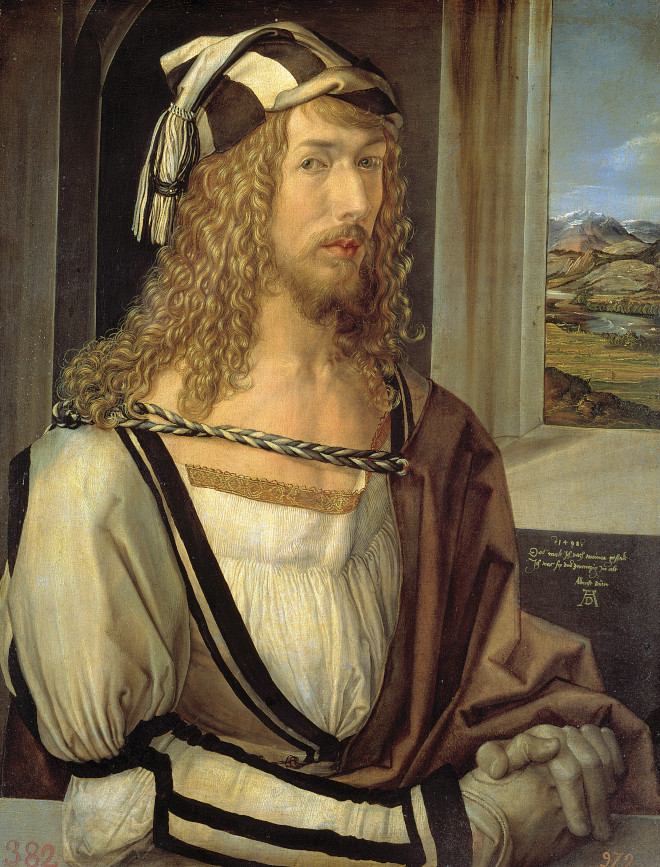
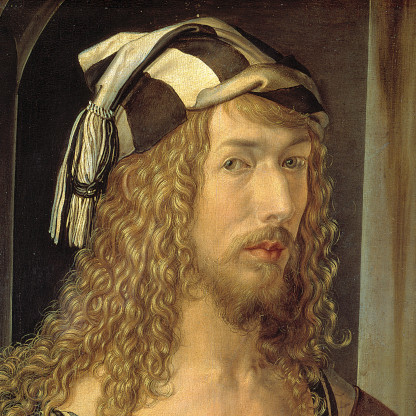
cropped from his self portrait
Albrecht Dürer — cropped from his self portrait
Photo Credit: By Albrecht Dürer - Museo Nacional del Prado, Galería online, Public Domain, https://commons.wikimedia.org/w/index.php?curid=17628367
Albrecht Dürer cropped from his self portrait
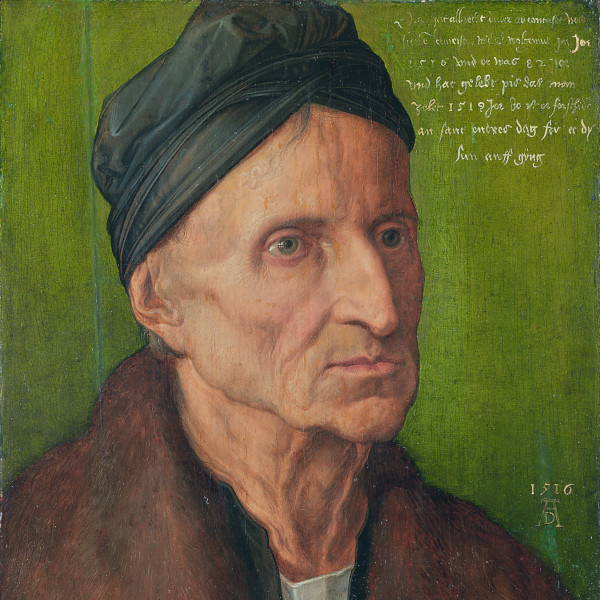
by Albrecht Dürer, circa 1516
Michael Wolgemut — by Albrecht Dürer, circa 1516
Photo Credit: Public Domain, https://commons.wikimedia.org/w/index.php?curid=15495045
Michael Wolgemut by Albrecht Dürer, circa 1516
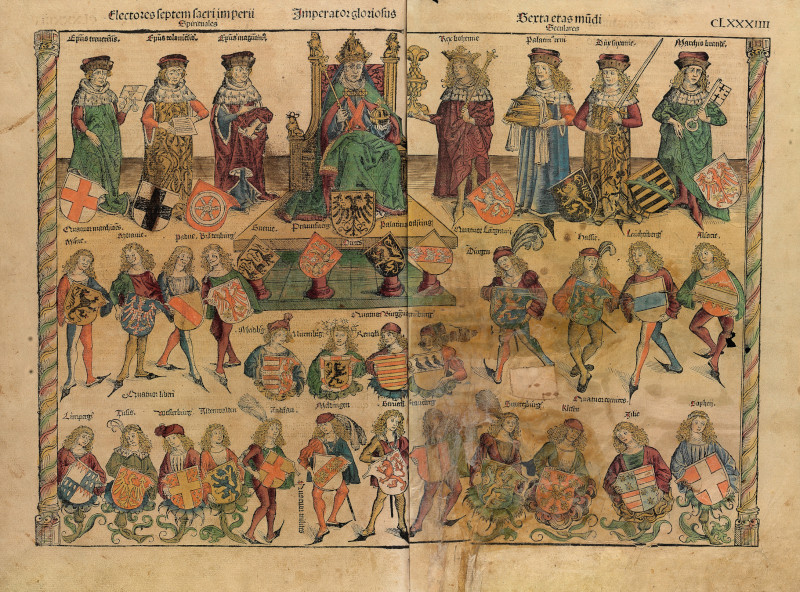
An illustration from <i>Nuremberg Chronicle</i> depicting the structure of the Reich: The Holy Roman Emperor is sitting; on his right are three ecclesiastics; on his left are four secular electors.
Structure of the Reich 1493 — An illustration from Nuremberg Chronicle depicting the structure of the Reich: The Holy Roman Emperor is sitting; on his right are three ecclesiastics; on his left are four secular electors.
Photo Credit: Public Domain, https://commons.wikimedia.org/w/index.php?curid=289569
Structure of the Reich 1493 An illustration from Nuremberg Chronicle depicting the structure of the Reich: The Holy Roman Emperor is sitting; on his right are three ecclesiastics; on his left are four secular electors.
From the <i>Nuremberg Chronicle</i>, 1493
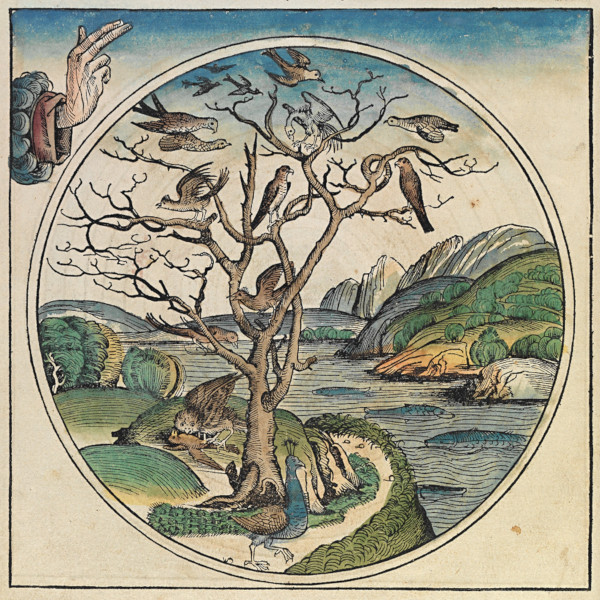
The Fifth day of creation — From the Nuremberg Chronicle, 1493
Photo Credit: By Hartmann Schedel - Self-scannedlanguage: Latin, Public Domain, https://commons.wikimedia.org/w/index.php?curid=899075
The Fifth day of creation From the Nuremberg Chronicle, 1493
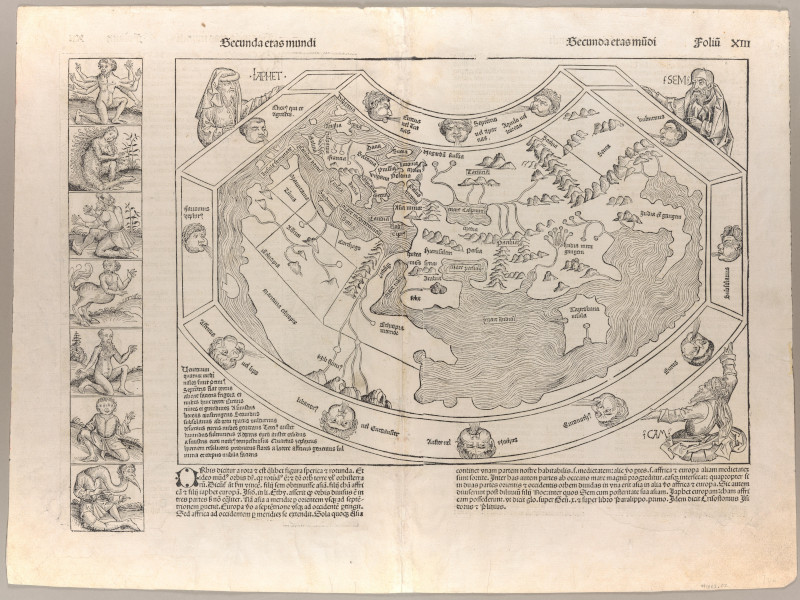
From an uncolored <i>Nuremberg Chronicle</i> (1493)
World Map 1493 — From an uncolored Nuremberg Chronicle (1493)
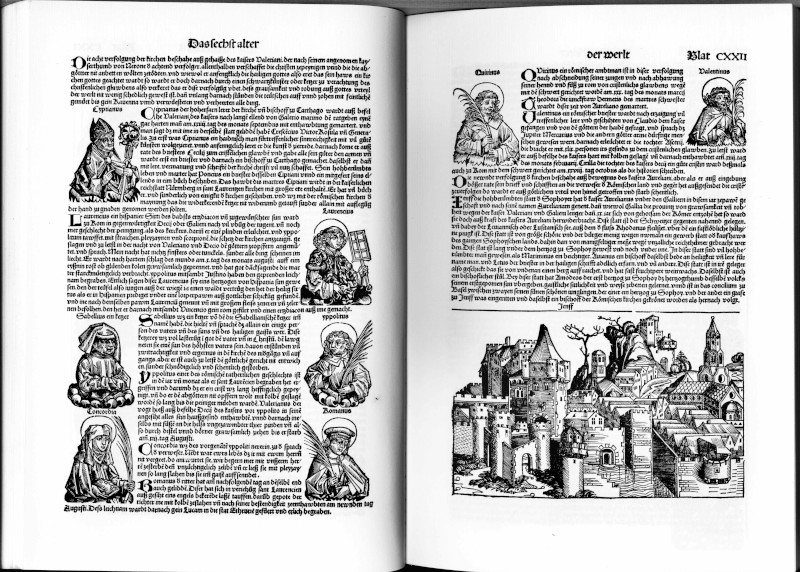
Photo Credit: By Hartmann Schedel - Schedel, Hartmann, Liber Chronicarum, Nuremberg, 1493.Cornell University: Persuasive Cartography, The PJ Mode Collection, Public Domain, https://commons.wikimedia.org/w/index.php?curid=44102998
World Map 1493 From an uncolored Nuremberg Chronicle (1493)
A typical opening, uncolored
Opening of Nuremberg Chronicle — A typical opening, uncolored
Photo Credit: By Hartmann Schedel - scan from original book, Public Domain, https://commons.wikimedia.org/w/index.php?curid=868704
Opening of Nuremberg Chronicle A typical opening, uncolored
Woodcut of Nuremberg from the Nuremberg Chronicle
Nuremberg 1493 — Woodcut of Nuremberg from the Nuremberg Chronicle
Photo Credit: Public Domain, https://commons.wikimedia.org/w/index.php?curid=872178
Nuremberg 1493 Woodcut of Nuremberg from the Nuremberg Chronicle
Shows Erfurt
Opening of Nuremberg Chronicle — Shows Erfurt
Photo Credit: Public Domain, https://commons.wikimedia.org/w/index.php?curid=296469
Double-headed eagle with coats of arms of individual states, the symbol of the Holy Roman Empire (painting from 1510)
States of Holy Roman Empire 1510 — Double-headed eagle with coats of arms of individual states, the symbol of the Holy Roman Empire (painting from 1510)
Photo Credit: By Hans Burgkmair der Ältere, cut by Jost de Negker 1510 - cut by Jost de Negker 1510, published by David de Necker (son), Public Domain, https://commons.wikimedia.org/w/index.php?curid=393400
States of Holy Roman Empire 1510 Double-headed eagle with coats of arms of individual states, the symbol of the Holy Roman Empire (painting from 1510)
cropped from banner of the Holy Roman Empire, double headed eagle with halos.
Insignia of the Holy Roman Empire — cropped from banner of the Holy Roman Empire, double headed eagle with halos.
Photo Credit: By David Liuzzo, eagle by N3MO - Own work, CC BY-SA 3.0, https://commons.wikimedia.org/w/index.php?curid=10025741
Insignia of the Holy Roman Empire cropped from banner of the Holy Roman Empire, double headed eagle with halos.
Pepin I of Aquitaine
Photo Credit: https://historica.fandom.com/wiki/Pepin_I_of_Aquitaine?file=Pepin_I_of_Aquitaine.png