Contributor
RickStudent, Philosopher, Writer, Developer
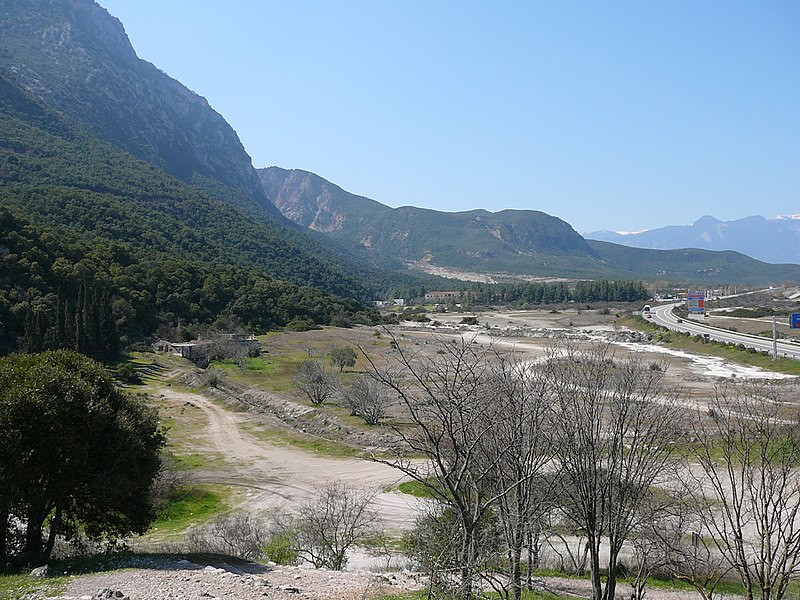
View of the Thermopylae pass from the area of the Phocian Wall. In ancient times, the coastline would have been much closer to the mountain, near the road to the right. This is a result of sedimentary deposition.
Thermopylae Pass — View of the Thermopylae pass from the area of the Phocian Wall. In ancient times, the coastline would have been much closer to the mountain, near the road to the right. This is a result of sedimentary deposition.
Photo Credit: By Fkerasar - The picture has been taken by me. It is part of a relevant photo gallery at Battle of Thermopylae. All the material is available under the GFDL., CC BY-SA 3.0, https://commons.wikimedia.org/w/index.php?curid=1961535
Thermopylae Pass View of the Thermopylae pass from the area of the Phocian Wall. In ancient times, the coastline would have been much closer to the mountain, near the road to the right. This is a result of sedimentary deposition.
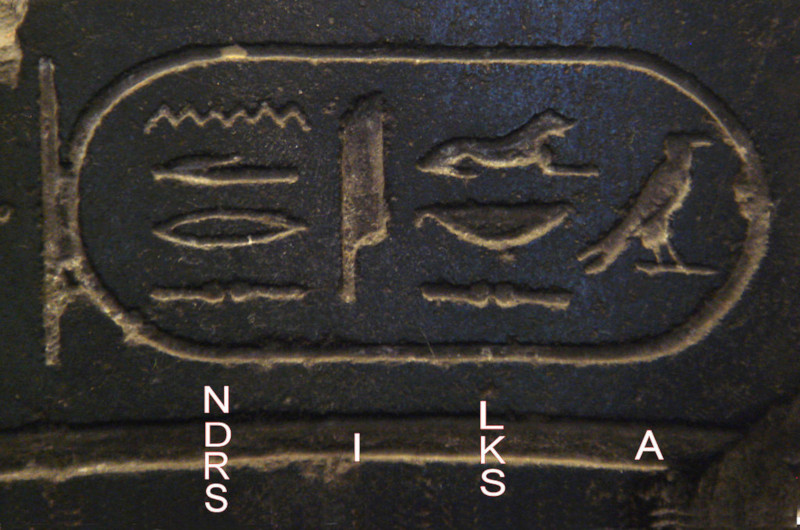
Written right to left, c. 332 BC, Egypt
Name of Alexander the Great in Egyptian hieroglyphs — Written right to left, c. 332 BC, Egypt
Photo Credit: By PHGCOM - Own work, photographed at Louvre Museum, own letters added, CC BY-SA 3.0, https://commons.wikimedia.org/w/index.php?curid=9662238
Name of Alexander the Great in Egyptian hieroglyphs Written right to left, c. 332 BC, Egypt
Gaza —
Photo Credit: By David Roberts - Library of Congress Prints and Photographs Division, Public Domain, https://commons.wikimedia.org/w/index.php?curid=5750344
Bust of one of the four external seated statues of Ramesses II at Abu Simbel
Ramesses II — Bust of one of the four external seated statues of Ramesses II at Abu Simbel
Photo Credit: By Hajor - Own work, Hajor., CC BY-SA 3.0, https://commons.wikimedia.org/w/index.php?curid=20459
Ramesses II Bust of one of the four external seated statues of Ramesses II at Abu Simbel
A Roman painting from the House of Giuseppe II in Pompeii, early 1st century AD, most likely depicting Cleopatra, wearing her royal diadem, consuming poison in an act of suicide, while her son Caesarion, also wearing a royal diadem, stands behind her
Cleopatra comitting suicide — A Roman painting from the House of Giuseppe II in Pompeii, early 1st century AD, most likely depicting Cleopatra, wearing her royal diadem, consuming poison in an act of suicide, while her son Caesarion, also wearing a royal diadem, stands behind her
Photo Credit: By Ancient Roman painter(s) - VIII.2.39 Pompeii. Casa di Giuseppe II or Casa di Fusco or House of Emperor Joseph II., Public Domain, https://commons.wikimedia.org/w/index.php?curid=67628691
Cleopatra comitting suicide A Roman painting from the House of Giuseppe II in Pompeii, early 1st century AD, most likely depicting Cleopatra, wearing her royal diadem, consuming poison in an act of suicide, while her son Caesarion, also wearing a royal diadem, stands behind her
Ancient Roman marble sculpture of Cleopatra VII's head as displayed at the Altes Museum in Berlin
Cleopatra VII — Ancient Roman marble sculpture of Cleopatra VII's head as displayed at the Altes Museum in Berlin
Photo Credit: Photo by Louis le Grand - Public Domain, https://commons.wikimedia.org/w/index.php?curid=2597825
Cleopatra VII Ancient Roman marble sculpture of Cleopatra VII's head as displayed at the Altes Museum in Berlin
cropped
Psamtik III — cropped
Photo Credit: Photo by Juan R. Lazaro, CC BY 2.0, https://commons.wikimedia.org/w/index.php?curid=26251952
Psamtik III cropped
Amasis II —
Photo Credit: By Ben Pirard, CC BY-SA 3.0, https://commons.wikimedia.org/w/index.php?curid=1797509
cropped
Gizah Pyramids — cropped
Photo Credit: By Ricardo Liberato - All Gizah Pyramids, CC BY-SA 2.0, https://commons.wikimedia.org/w/index.php?curid=2258048
Gizah Pyramids cropped
Meeting Between Cambyses II and Psammetichus III —
Photo Credit: By Adrien Guignet (1854) - Public Domain, https://commons.wikimedia.org/w/index.php?curid=30405983
Dated to the regnal year 6 of Cambyses , and depicting the king (kneeling, left) as an Egyptian pharaoh, while worshiping a dead Apis bull (right). Ironically, later Greek traditions depicted Cambyses as the slayer of this Apis bull.
Apis stele (524 BC) — Dated to the regnal year 6 of Cambyses , and depicting the king (kneeling, left) as an Egyptian pharaoh, while worshiping a dead Apis bull (right). Ironically, later Greek traditions depicted Cambyses as the slayer of this Apis bull.
Photo Credit: Public Domain, https://commons.wikimedia.org/w/index.php?curid=78408401
Apis stele (524 BC) Dated to the regnal year 6 of Cambyses , and depicting the king (kneeling, left) as an Egyptian pharaoh, while worshiping a dead Apis bull (right). Ironically, later Greek traditions depicted Cambyses as the slayer of this Apis bull.