Contributor
RickStudent, Philosopher, Writer, Developer
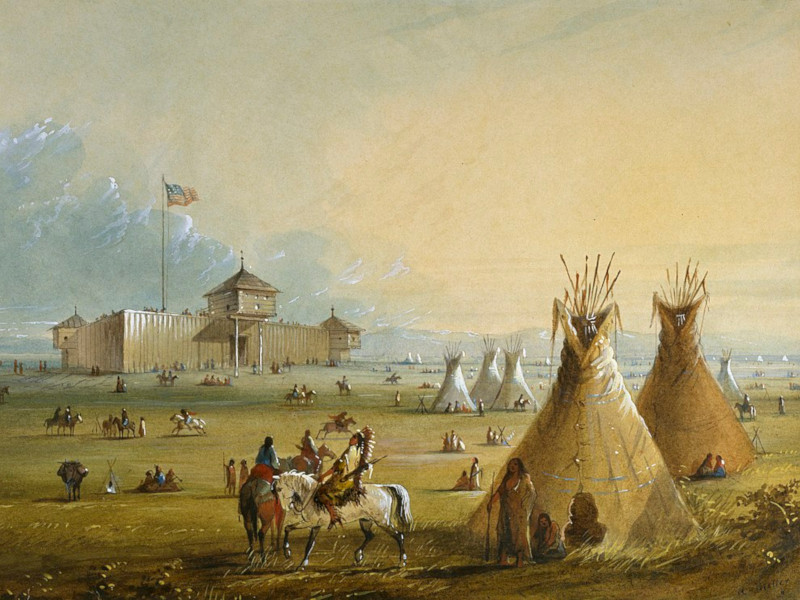
As it looked prior to 1840. Painting from memory by Alfred Jacob Miller - his works are the only known visual records of the fort, because the original fort was torn down in 1840 before any other artist had traveled the Oregon Trail; it was replaced with another structure, located perhaps on the same site in 1841.
Fort William, the first Fort Laramie — As it looked prior to 1840. Painting from memory by Alfred Jacob Miller - his works are the only known visual records of the fort, because the original fort was torn down in 1840 before any other artist had traveled the Oregon Trail; it was replaced with another structure, located perhaps on the same site in 1841.
Photo Credit: By Alfred Jacob Miller - Public Domain, https://commons.wikimedia.org/w/index.php?curid=18845380
Fort William, the first Fort Laramie As it looked prior to 1840. Painting from memory by Alfred Jacob Miller - his works are the only known visual records of the fort, because the original fort was torn down in 1840 before any other artist had traveled the Oregon Trail; it was replaced with another structure, located perhaps on the same site in 1841.
cropped to suare
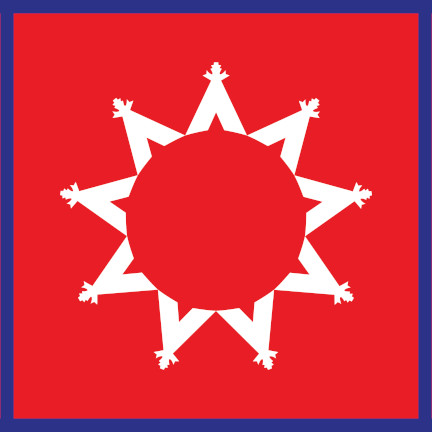
Oglala Sioux Tribe flag — cropped to suare
Photo Credit: https://www.indianz.com/News/2016/10/05/cairns-column-examining-the-flag-from-th.asp
Oglala Sioux Tribe flag cropped to suare
TheSioux would assemble each summer to hold council, renew kinships, , and participate in the Sun Dance. The seven divisions would each select four leaders for this high honor.
Chief Red Cloud and other Lakota leaders c. 1865-1880 — TheSioux would assemble each summer to hold council, renew kinships, , and participate in the Sun Dance. The seven divisions would each select four leaders for this high honor.
Photo Credit: Public Domain, https://commons.wikimedia.org/w/index.php?curid=2014830
Chief Red Cloud and other Lakota leaders c. 1865-1880 TheSioux would assemble each summer to hold council, renew kinships, , and participate in the Sun Dance. The seven divisions would each select four leaders for this high honor.
Depicts Running Antelope, a Hunkpapa Lakota Chief
US 1899 $5 silver certificate — Depicts Running Antelope, a Hunkpapa Lakota Chief
Photo Credit: By National Museum of American History - Public Domain, https://commons.wikimedia.org/w/index.php?curid=24955761
US 1899 $5 silver certificate Depicts Running Antelope, a Hunkpapa Lakota Chief
Prior to 1770 (dark green) and their current reservations (orange)
Location of Sioux tribes in the US — Prior to 1770 (dark green) and their current reservations (orange)
Photo Credit: By Wikipedia User:Nikater - Public Domain, https://commons.wikimedia.org/w/index.php?curid=2309029
Location of Sioux tribes in the US Prior to 1770 (dark green) and their current reservations (orange)

cropped
Northern Cheyenne Tribe flag — cropped
Photo Credit: By Arturo Espinosa-Aldama - http://www.msg.com.mx/~arturo/Projects/Freeciv-Worms/, GPL, https://commons.wikimedia.org/w/index.php?curid=997212
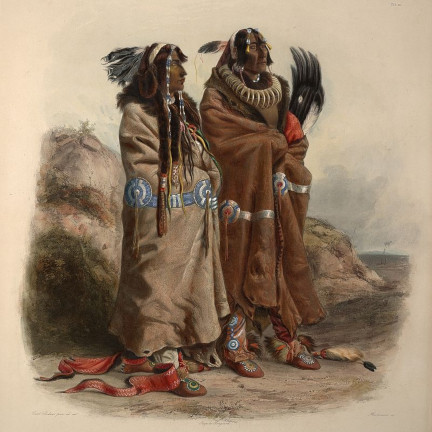
A pair of Mandan men —
Photo Credit: By Karl Bodmer - 1832–1834 - Public Domain, https://commons.wikimedia.org/w/index.php?curid=38943429
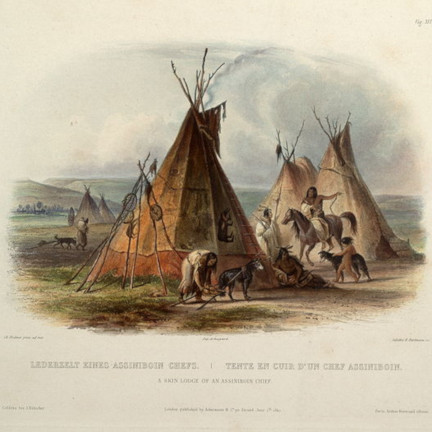
Skin lodge of an Assiniboine chief —
Photo Credit: Public Domain, https://commons.wikimedia.org/w/index.php?curid=1342581
cropped
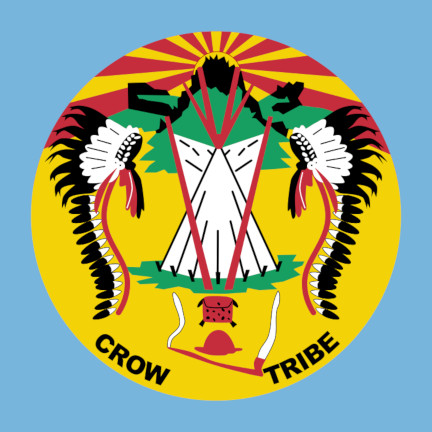
Flag of the Crow Tribe of Montana — cropped
Photo Credit: Public Domain, https://commons.wikimedia.org/w/index.php?curid=29090617
cropped
Flag of the Arapaho Nation, Wyoming, USA — cropped
Photo Credit: Public Domain, https://commons.wikimedia.org/w/index.php?curid=1031311
During its early history, Cherokee and Arapaho often camped in the area.
Denver, 1859 — During its early history, Cherokee and Arapaho often camped in the area.
Photo Credit: Public Domain, https://commons.wikimedia.org/w/index.php?curid=1648024
Denver, 1859 During its early history, Cherokee and Arapaho often camped in the area.