Contributor
RickStudent, Philosopher, Writer, Developer
Rescue of Major Israel Putnam near Glens Falls, 1758
Photo Credit: Public Domain, https://en.wikipedia.org/w/index.php?curid=1188584
Designed by Karoniaktajeh (Louis Hall), used between 1974 and 2016
Mohawk Warrior Flag — Designed by Karoniaktajeh (Louis Hall), used between 1974 and 2016
Photo Credit: By Maqtewe'kpaqtism - http://www.crwflags.com/fotw/flags/ca_mohak.html, CC BY-SA 3.0, https://commons.wikimedia.org/w/index.php?curid=27147568
Mohawk Warrior Flag Designed by Karoniaktajeh (Louis Hall), used between 1974 and 2016
during the American Revolutionary War
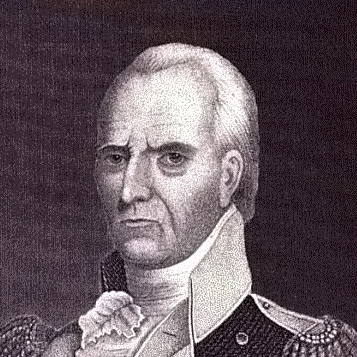
Major General Israel Putnam — during the American Revolutionary War
Photo Credit: Public Domain, https://commons.wikimedia.org/w/index.php?curid=51631
Major General Israel Putnam during the American Revolutionary War
Percy Moran, 1909
Battle of Bunker Hill — Percy Moran, 1909
Photo Credit: Public Domain, https://commons.wikimedia.org/w/index.php?curid=52093
Battle of Bunker Hill Percy Moran, 1909
Gen. Sir William Howe
Photo Credit: By Henry Bryan Hall - Public Domain, https://commons.wikimedia.org/w/index.php?curid=12092736
The Bunker Hill Monument
Colonel William Prescott, (sculpture) — The Bunker Hill Monument
Photo Credit: Public Domain, https://commons.wikimedia.org/w/index.php?curid=21041181
Colonel William Prescott, (sculpture) The Bunker Hill Monument
The Death of General Warren at the Battle of Bunker's Hill
Photo Credit: By John Trumbull - From the Boston Museum of Fine Arts - Public Domain, https://commons.wikimedia.org/w/index.php?curid=51935
An Arrikara warrior
Photo Credit: By Karl Bodmer - Library of Congress, Public Domain, https://commons.wikimedia.org/w/index.php?curid=1342589
Hidatsa performing dog dance in regalia by Karl Bodmer. In his right hand, he holds a rattle of pronghorn hoofs. A bone flute is hanging in a string around his neck.
Hidatsa — Hidatsa performing dog dance in regalia by Karl Bodmer. In his right hand, he holds a rattle of pronghorn hoofs. A bone flute is hanging in a string around his neck.
Photo Credit: By Karl Bodmer - Library of Congress, Public Domain, https://commons.wikimedia.org/w/index.php?curid=30895797
Hidatsa Hidatsa performing dog dance in regalia by Karl Bodmer. In his right hand, he holds a rattle of pronghorn hoofs. A bone flute is hanging in a string around his neck.
Interior of the original Fort Laramie as it looked prior to 1840. Painting from memory by Alfred Jacob Miller <br>In this scene Miller has provided the only visual record of the first Fort Laramie, erected in 1834. Located in eastern Wyoming, the fort marked the beginning of what would later become the Oregon Trail, the route that was taken by settlers moving west.
Fort Laramie — Interior of the original Fort Laramie as it looked prior to 1840. Painting from memory by Alfred Jacob Miller
In this scene Miller has provided the only visual record of the first Fort Laramie, erected in 1834. Located in eastern Wyoming, the fort marked the beginning of what would later become the Oregon Trail, the route that was taken by settlers moving west.
Photo Credit: Public Domain, https://commons.wikimedia.org/w/index.php?curid=18782827
Fort Laramie Interior of the original Fort Laramie as it looked prior to 1840. Painting from memory by Alfred Jacob Miller
In this scene Miller has provided the only visual record of the first Fort Laramie, erected in 1834. Located in eastern Wyoming, the fort marked the beginning of what would later become the Oregon Trail, the route that was taken by settlers moving west.
Crow territory (area 517, 619 and 635) as described in the treaty in present Montana and Wyoming. It includes the western Powder River area and the Yellowstone area with tributaries as Tongue River, Rosebud River and Bighorn River.
Crow Indian territory - Fort Laramie treaty (1851) — Crow territory (area 517, 619 and 635) as described in the treaty in present Montana and Wyoming. It includes the western Powder River area and the Yellowstone area with tributaries as Tongue River, Rosebud River and Bighorn River.
Photo Credit: By U.S. government, maps - Public Domain, https://commons.wikimedia.org/w/index.php?curid=61256075
Crow Indian territory - Fort Laramie treaty (1851) Crow territory (area 517, 619 and 635) as described in the treaty in present Montana and Wyoming. It includes the western Powder River area and the Yellowstone area with tributaries as Tongue River, Rosebud River and Bighorn River.