Contributor
RickStudent, Philosopher, Writer, Developer
In 1667, by Henri Testelin; in the background appears the new Paris Observatory
Colbert Presenting the Members of the Royal Academy of Sciences to Louis XIV — In 1667, by Henri Testelin; in the background appears the new Paris Observatory
Photo Credit: After Charles Le Brun - Public Domain, https://commons.wikimedia.org/w/index.php?curid=12278840
Colbert Presenting the Members of the Royal Academy of Sciences to Louis XIV In 1667, by Henri Testelin; in the background appears the new Paris Observatory
Jean-Baptiste Colbert
Photo Credit: By Philippe de Champaigne - Metropolitan Museum of Art Public Domain, https://commons.wikimedia.org/w/index.php?curid=1353933
French Academy of Sciences logo
Photo Credit:
Jean-Antoine Nollet
Photo Credit: Public Domain, https://commons.wikimedia.org/w/index.php?curid=802131
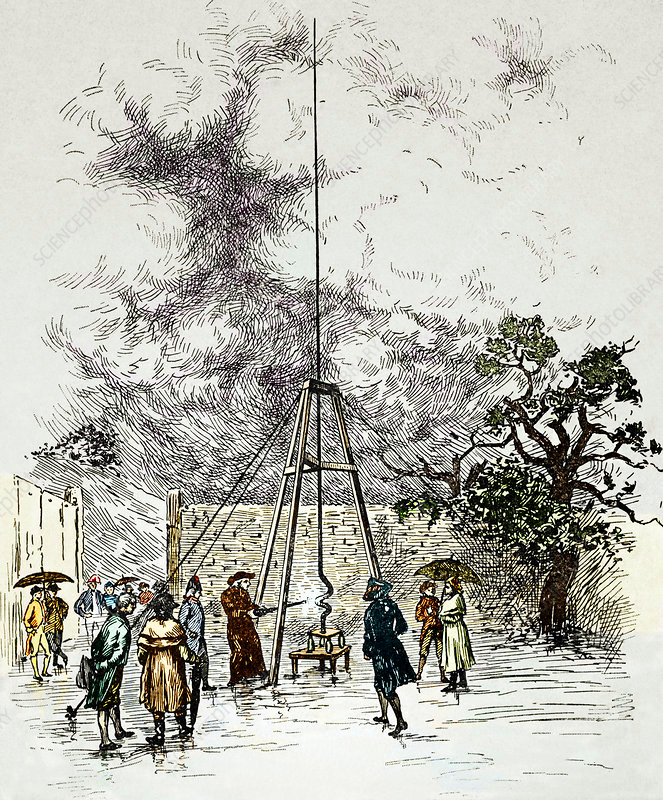
Cropped from The BEP engraved the vignette Franklin and Electricity (c. 1860) which was used on the $10 National Bank Note from the 1860s to 1890s
Franklin and Electricity: Kite Experiment — Cropped from The BEP engraved the vignette Franklin and Electricity (c. 1860) which was used on the $10 National Bank Note from the 1860s to 1890s
Photo Credit: By Alfred Jones, for the Bureau of Engraving and Printing - Restoration by Godot13, Public Domain, https://commons.wikimedia.org/w/index.php?curid=33575176
Franklin and Electricity: Kite Experiment Cropped from The BEP engraved the vignette Franklin and Electricity (c. 1860) which was used on the $10 National Bank Note from the 1860s to 1890s
Figure V and VI from <i>Ottonis De Guericke Experimenta Nova (ut vocantur) Magdeburgica De Vacuo Spatio</i>, Amstelodami: Janssonius, 1672, p. 148, showing Guericke's experiments with the sulfur globe.
Guericke's experiments with the sulfur globe — Figure V and VI from Ottonis De Guericke Experimenta Nova (ut vocantur) Magdeburgica De Vacuo Spatio, Amstelodami: Janssonius, 1672, p. 148, showing Guericke's experiments with the sulfur globe.
Photo Credit: By Otto von Guericke - Public Domain, https://commons.wikimedia.org/w/index.php?curid=18292849
Guericke's experiments with the sulfur globe Figure V and VI from Ottonis De Guericke Experimenta Nova (ut vocantur) Magdeburgica De Vacuo Spatio, Amstelodami: Janssonius, 1672, p. 148, showing Guericke's experiments with the sulfur globe.
Leopold I
Photo Credit: Attributed to Pietro Liberi - Public Domain, https://commons.wikimedia.org/w/index.php?curid=4853355
Otto von Guericke
Photo Credit: By Anselm van Hulle - Peace Palace Library, Public Domain, https://commons.wikimedia.org/w/index.php?curid=32798824
Drawing of a Leyden jar, a piece of antique scientific apparatus used to store electric charge, from a 1919 physics textIt consists of a glass jar with tin foil coating the outside and inside surfaces. A brass electrode pierces the stopper, with a hanging chain attached which makes contact with the inner foil, so the jar can be charged. In use, the outside of the jar is connected to ground, and the central electrode is attached to a high voltage electrostatic machine. A large charge of static electricity accumulates on the inner foil, and an opposite polarity charge accumulates on the outer foil. If a wire connected to the outer foil is brought near the central electrode, a spark will jump, discharging the jar. The foil linings stop well short of the mouth of the jar so the charge on the foils can't discharge by arcing through the mouth. The glass was usually shellacked before applying the foil, because bare glass forms a partially conductive hygroscopic coating which tended to discharge the jar.
Metal foil Leyden jar — Drawing of a Leyden jar, a piece of antique scientific apparatus used to store electric charge, from a 1919 physics textIt consists of a glass jar with tin foil coating the outside and inside surfaces. A brass electrode pierces the stopper, with a hanging chain attached which makes contact with the inner foil, so the jar can be charged. In use, the outside of the jar is connected to ground, and the central electrode is attached to a high voltage electrostatic machine. A large charge of static electricity accumulates on the inner foil, and an opposite polarity charge accumulates on the outer foil. If a wire connected to the outer foil is brought near the central electrode, a spark will jump, discharging the jar. The foil linings stop well short of the mouth of the jar so the charge on the foils can't discharge by arcing through the mouth. The glass was usually shellacked before applying the foil, because bare glass forms a partially conductive hygroscopic coating which tended to discharge the jar.
Photo Credit: By Robert Alexander Houstoun - Public Domain, https://commons.wikimedia.org/w/index.php?curid=27758170
Metal foil Leyden jar Drawing of a Leyden jar, a piece of antique scientific apparatus used to store electric charge, from a 1919 physics textIt consists of a glass jar with tin foil coating the outside and inside surfaces. A brass electrode pierces the stopper, with a hanging chain attached which makes contact with the inner foil, so the jar can be charged. In use, the outside of the jar is connected to ground, and the central electrode is attached to a high voltage electrostatic machine. A large charge of static electricity accumulates on the inner foil, and an opposite polarity charge accumulates on the outer foil. If a wire connected to the outer foil is brought near the central electrode, a spark will jump, discharging the jar. The foil linings stop well short of the mouth of the jar so the charge on the foils can't discharge by arcing through the mouth. The glass was usually shellacked before applying the foil, because bare glass forms a partially conductive hygroscopic coating which tended to discharge the jar.
Drawing of an early form of Leyden jar, from an 1898 textbook on physics. Unlike the later type of Leyden jar which had coatings of metal foil on the inside and outside, this first form of Leyden jar was filled with water; the water formed the inner plate of the capacitor. A metal nail driven through the cork stopper made contact with the water, allowing the water to be charged with electricity and discharged. The jar was held in the hand, and the (grounded) hand on the outside of the jar formed the other plate of the capacitor. Once charged, the jar could be discharged by approaching the nail with a finger as shown. The charge from the water would jump via a spark to the hand, and flow through the body to the other hand holding the jar, neutralizing the opposite charge there. This often resulted in a nasty shock.
Water-filled Leyden jar — Drawing of an early form of Leyden jar, from an 1898 textbook on physics. Unlike the later type of Leyden jar which had coatings of metal foil on the inside and outside, this first form of Leyden jar was filled with water; the water formed the inner plate of the capacitor. A metal nail driven through the cork stopper made contact with the water, allowing the water to be charged with electricity and discharged. The jar was held in the hand, and the (grounded) hand on the outside of the jar formed the other plate of the capacitor. Once charged, the jar could be discharged by approaching the nail with a finger as shown. The charge from the water would jump via a spark to the hand, and flow through the body to the other hand holding the jar, neutralizing the opposite charge there. This often resulted in a nasty shock.
Photo Credit: By W. Jerome Harrison - Public Domain, https://commons.wikimedia.org/w/index.php?curid=10942385
Water-filled Leyden jar Drawing of an early form of Leyden jar, from an 1898 textbook on physics. Unlike the later type of Leyden jar which had coatings of metal foil on the inside and outside, this first form of Leyden jar was filled with water; the water formed the inner plate of the capacitor. A metal nail driven through the cork stopper made contact with the water, allowing the water to be charged with electricity and discharged. The jar was held in the hand, and the (grounded) hand on the outside of the jar formed the other plate of the capacitor. Once charged, the jar could be discharged by approaching the nail with a finger as shown. The charge from the water would jump via a spark to the hand, and flow through the body to the other hand holding the jar, neutralizing the opposite charge there. This often resulted in a nasty shock.
Drawing of a
"Dissectible" Leyden jar — Drawing of a "dissectible" Leyden jar, from 1876 physics book. This experimental apparatus, invented by American statesman and scientist Benjamin Franklin, was used to illustrate an erroneous belief that the charge on a Leyden jar does not reside on the metal plates, but on the glass jar dielectric. The jar was assembled and charged with electricity. If the jar was then disassembled into its parts, it was found that the parts were not charged and could be handled without creating a spark. However, if the jar was then reassembled, a spark could be obtained between the inner and outer metal plates. This was supposed to show that the charge in Leyden jars, and all capacitors, is stored in the dielectric, not the metal plates. However, it is now known that this was a special effect caused by the high voltage on the Leyden jar. When the jar is disassembled, the charge is deposited on the glass by corona discharge. Handling does not remove much of the charge, so when the jar is reassembled there is enough left to cause a spark. In general the charge in capacitors such as Leyden jars is stored on the plates.
Photo Credit: By John Tyndall - Downloaded 2010 from John Tyndall (1876) Lessons in Electricity at the Royal Institution, 1875-6, Longmans Green & Co., London, p.79, fig.43 on Google Books, Public Domain, https://commons.wikimedia.org/w/index.php?curid=9808039
"Dissectible" Leyden jar Drawing of a "dissectible" Leyden jar, from 1876 physics book. This experimental apparatus, invented by American statesman and scientist Benjamin Franklin, was used to illustrate an erroneous belief that the charge on a Leyden jar does not reside on the metal plates, but on the glass jar dielectric. The jar was assembled and charged with electricity. If the jar was then disassembled into its parts, it was found that the parts were not charged and could be handled without creating a spark. However, if the jar was then reassembled, a spark could be obtained between the inner and outer metal plates. This was supposed to show that the charge in Leyden jars, and all capacitors, is stored in the dielectric, not the metal plates. However, it is now known that this was a special effect caused by the high voltage on the Leyden jar. When the jar is disassembled, the charge is deposited on the glass by corona discharge. Handling does not remove much of the charge, so when the jar is reassembled there is enough left to cause a spark. In general the charge in capacitors such as Leyden jars is stored on the plates.