Contributor
RickStudent, Philosopher, Writer, Developer
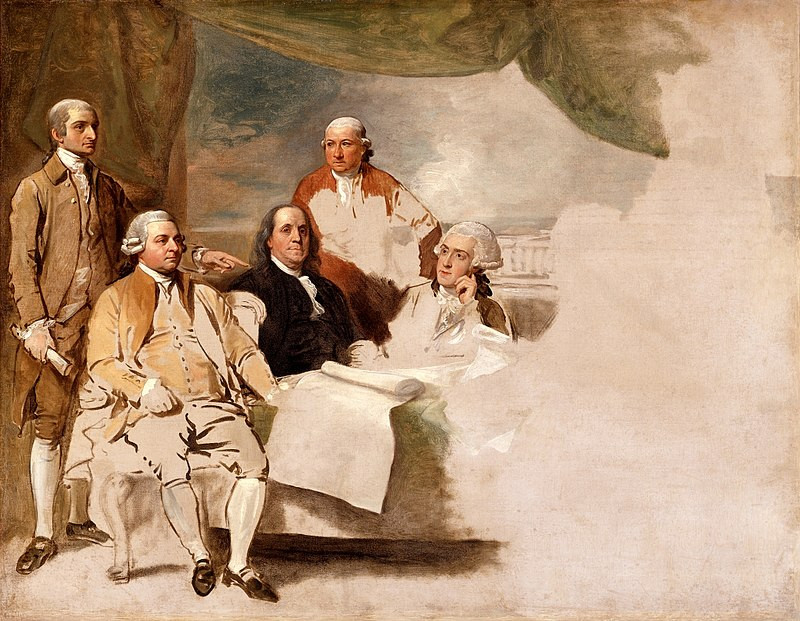
Depicts the United States delegation at the Treaty of Paris (left to right): John Jay, John Adams, Benjamin Franklin, Henry Laurens, and William Temple Franklin. The British delegation refused to pose, and the painting was never completed
Treaty of Paris — Depicts the United States delegation at the Treaty of Paris (left to right): John Jay, John Adams, Benjamin Franklin, Henry Laurens, and William Temple Franklin. The British delegation refused to pose, and the painting was never completed
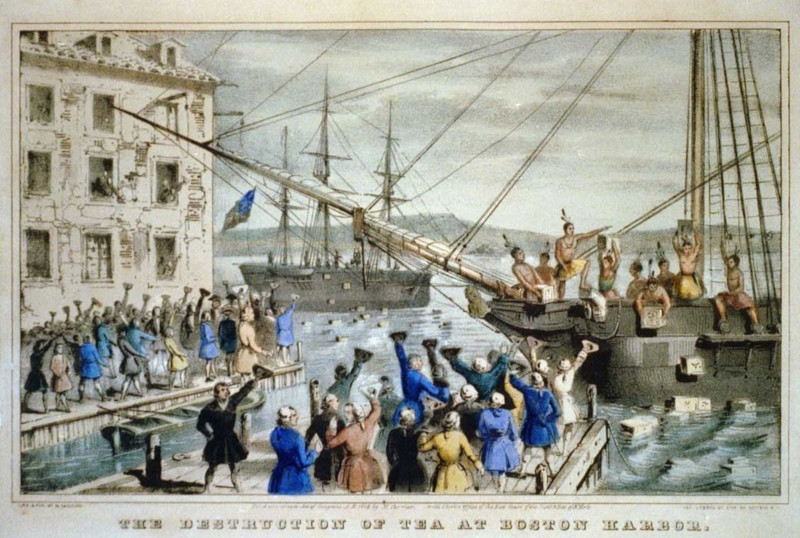
Photo Credit: By Benjamin West, 1783 - Public Domain, https://commons.wikimedia.org/w/index.php?curid=868138
Treaty of Paris Depicts the United States delegation at the Treaty of Paris (left to right): John Jay, John Adams, Benjamin Franklin, Henry Laurens, and William Temple Franklin. The British delegation refused to pose, and the painting was never completed
Map of the USA and territories after the Treaty of Paris —
Photo Credit: By Kmusser - Own work, CC BY-SA 2.5, https://commons.wikimedia.org/w/index.php?curid=1193686
Iconic 1846 lithograph by Nathaniel Currier entitled The Destruction of Tea at Boston Harbor; the phrase
The Destruction of Tea at Boston Harbor — Iconic 1846 lithograph by Nathaniel Currier entitled The Destruction of Tea at Boston Harbor; the phrase "Boston Tea Party" had not yet become standard. Contrary to Currier's depiction, few of the men dumping the tea were actually disguised as Native Americans.
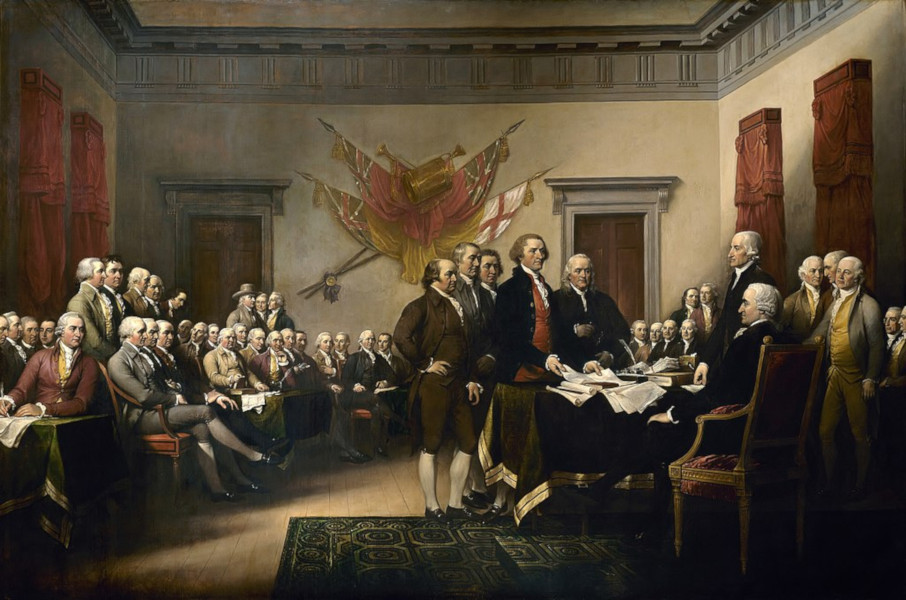
Photo Credit: By Nathaniel Currier - Public Domain, https://commons.wikimedia.org/w/index.php?curid=6354651
The Destruction of Tea at Boston Harbor Iconic 1846 lithograph by Nathaniel Currier entitled The Destruction of Tea at Boston Harbor; the phrase "Boston Tea Party" had not yet become standard. Contrary to Currier's depiction, few of the men dumping the tea were actually disguised as Native Americans.
Declaration of Independence —
Photo Credit: By John Trumbull - US Capitol, Public Domain, https://commons.wikimedia.org/w/index.php?curid=180069
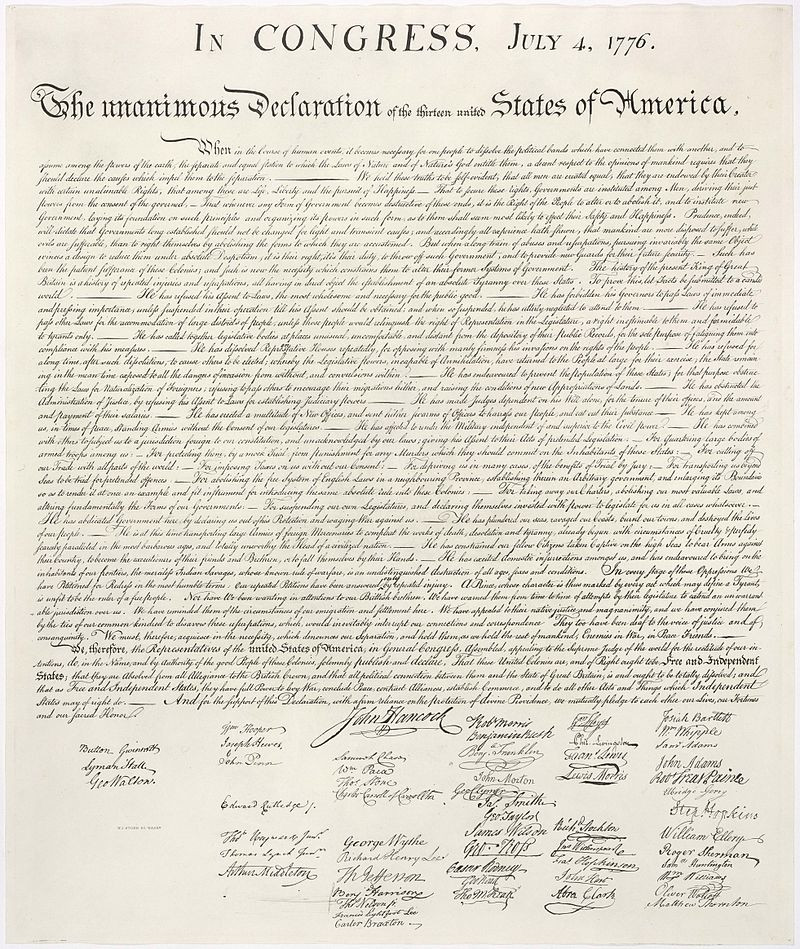
United States Declaration of Independence —
Photo Credit: By original: w:Second Continental Congress; reproduction: William Stone - numerous, Public Domain, https://commons.wikimedia.org/w/index.php?curid=621811
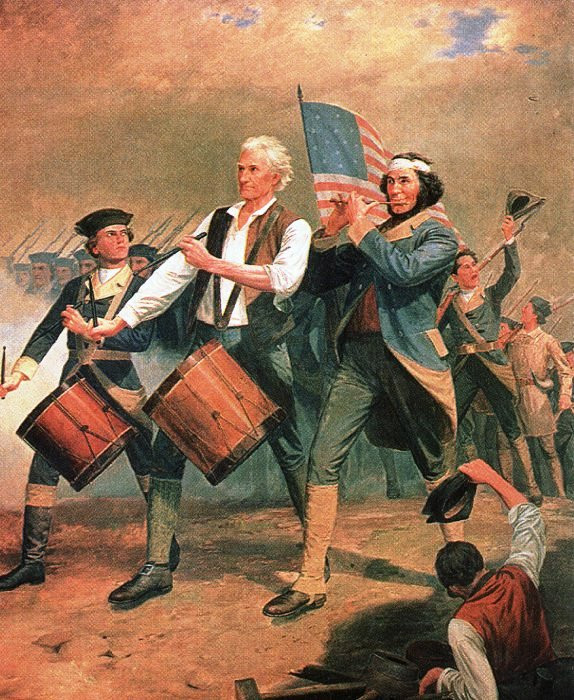
Originally entitled <i>Yankee Doodle</i>, this is one of several versions of a scene painted by A. M. Willard that came to be known as <i>The Spirit of '76</i>. Often imitated or parodied, it is a familiar symbol of American patriotism
The Spirit of '76 — Originally entitled Yankee Doodle, this is one of several versions of a scene painted by A. M. Willard that came to be known as The Spirit of '76. Often imitated or parodied, it is a familiar symbol of American patriotism
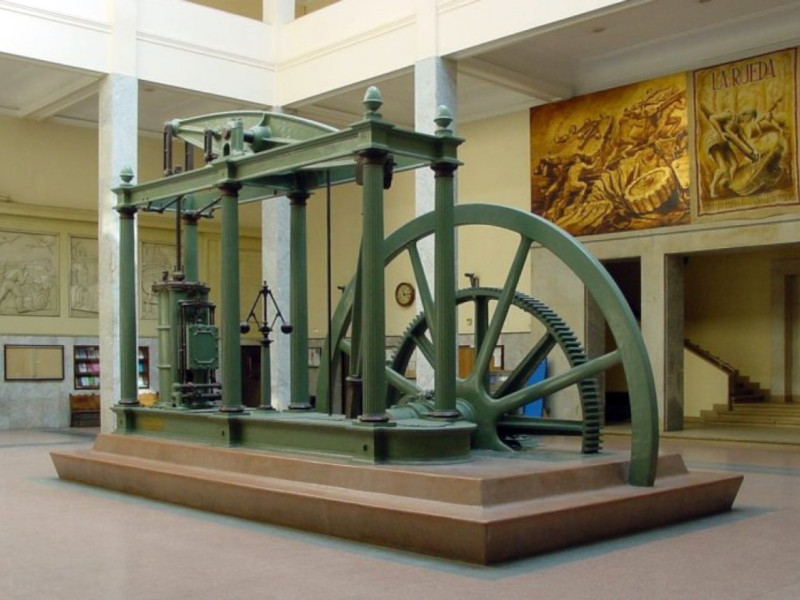
Photo Credit: By Archibald Willard - Public Domain, https://commons.wikimedia.org/w/index.php?curid=60979744
The Spirit of '76 Originally entitled Yankee Doodle, this is one of several versions of a scene painted by A. M. Willard that came to be known as The Spirit of '76. Often imitated or parodied, it is a familiar symbol of American patriotism
A late version of a Watt double-acting steam engine, built by D. Napier & Son (London) in 1859, now in the lobby of the Superior Technical School of Industrial Engineers of the UPM (Madrid). Steam engines of this kind propelled the Industrial Revolution in Great Britain and the world.
Watt steam engine — A late version of a Watt double-acting steam engine, built by D. Napier & Son (London) in 1859, now in the lobby of the Superior Technical School of Industrial Engineers of the UPM (Madrid). Steam engines of this kind propelled the Industrial Revolution in Great Britain and the world.
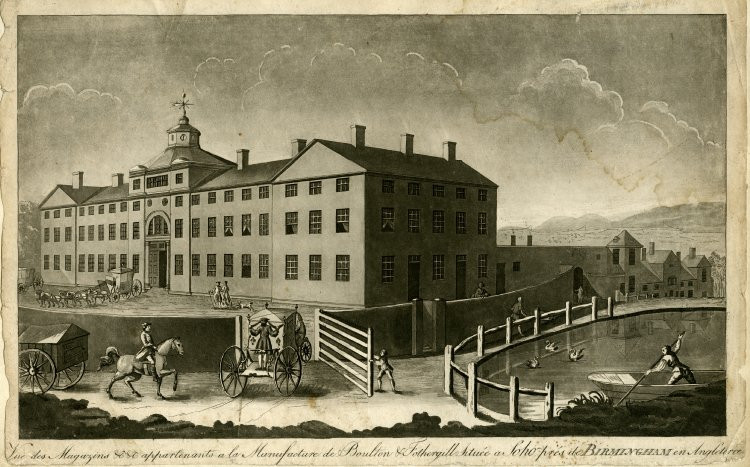
Photo Credit: By Nicolás Pérez, CC BY-SA 3.0, https://commons.wikimedia.org/w/index.php?curid=195711
Watt steam engine A late version of a Watt double-acting steam engine, built by D. Napier & Son (London) in 1859, now in the lobby of the Superior Technical School of Industrial Engineers of the UPM (Madrid). Steam engines of this kind propelled the Industrial Revolution in Great Britain and the world.
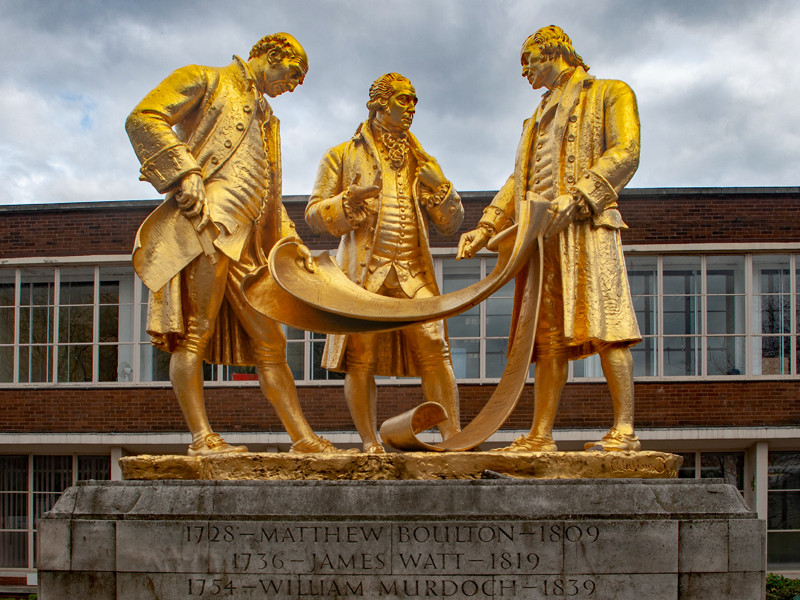
Statue of Boulton, Watt and Murdoch in Birmingham —
Photo Credit: By Murgatroyd49 - Own work, CC BY-SA 4.0, https://commons.wikimedia.org/w/index.php?curid=90950568
The Soho Manufactory —
Photo Credit: By Francis Eginton - Public Domain, https://commons.wikimedia.org/w/index.php?curid=14694195
Matthew Boulton —
Photo Credit: By Carl Frederik von Breda - Public Domain, https://commons.wikimedia.org/w/index.php?curid=6409131
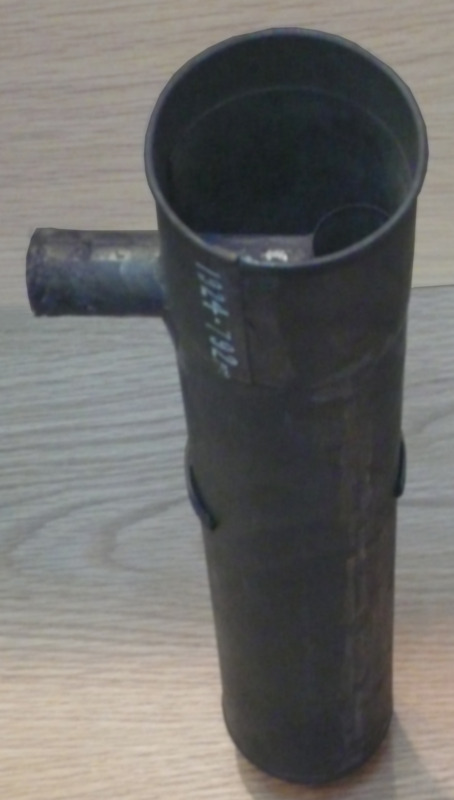
Top frontal view of the first ever Watt condenser which led to the improvement of the Boulton & Watt steam Engines in comparison with their contemporaries. Steam enters brass condenser at the left. The Steam is forced through the condenser by an air pump (vacuum pump), part of the outer tubing of the later can be seen attached to the steam inlet into the condenser. The steam flows through the input tube down two smaller tubes (not visible) into the false bottom of the condenser which is connected to the integral air pump. For operation the condenser was filled with water.
Original condenser by Watt — Top frontal view of the first ever Watt condenser which led to the improvement of the Boulton & Watt steam Engines in comparison with their contemporaries. Steam enters brass condenser at the left. The Steam is forced through the condenser by an air pump (vacuum pump), part of the outer tubing of the later can be seen attached to the steam inlet into the condenser. The steam flows through the input tube down two smaller tubes (not visible) into the false bottom of the condenser which is connected to the integral air pump. For operation the condenser was filled with water.
Photo Credit: By Dr. Mirko Junge - Own picture of Watts first condensor at the Science Museum, London., CC BY 3.0, https://commons.wikimedia.org/w/index.php?curid=5083433
Original condenser by Watt Top frontal view of the first ever Watt condenser which led to the improvement of the Boulton & Watt steam Engines in comparison with their contemporaries. Steam enters brass condenser at the left. The Steam is forced through the condenser by an air pump (vacuum pump), part of the outer tubing of the later can be seen attached to the steam inlet into the condenser. The steam flows through the input tube down two smaller tubes (not visible) into the false bottom of the condenser which is connected to the integral air pump. For operation the condenser was filled with water.